Term (also wine grape) for those grapes from vines that are used for the production of wine or spirits such as brandy(Armagnac, Cognac, Metaxa etc.) and even vodka (together around 85% worldwide). Other groups include table gra pes (table grapes) and sultanas. There are around 8,000 to 10,000 different grape varieties worldwide, whereby the morphology such as leaf shape, grape shape (shouldered wedge shape, unshouldered cylindrical shape), texture and colour of the berries are characteristic of the respective variety.
The vine develops the grape cluster during the annual vegetation cycle. As a rule, the grapes are harvested at the optimum physiological ripeness, which is a prerequisite for high quality. For Prädikat wines such as Spätlese, Beerenauslese, Trockenbeerenauslese or Eiswein, this takes place much later because a special grape condition is required. In Austria and Germany in particular, a certain degree of sugar in the grapes during harvesting is an important criterion for the subsequent wine quality level (see must weight).
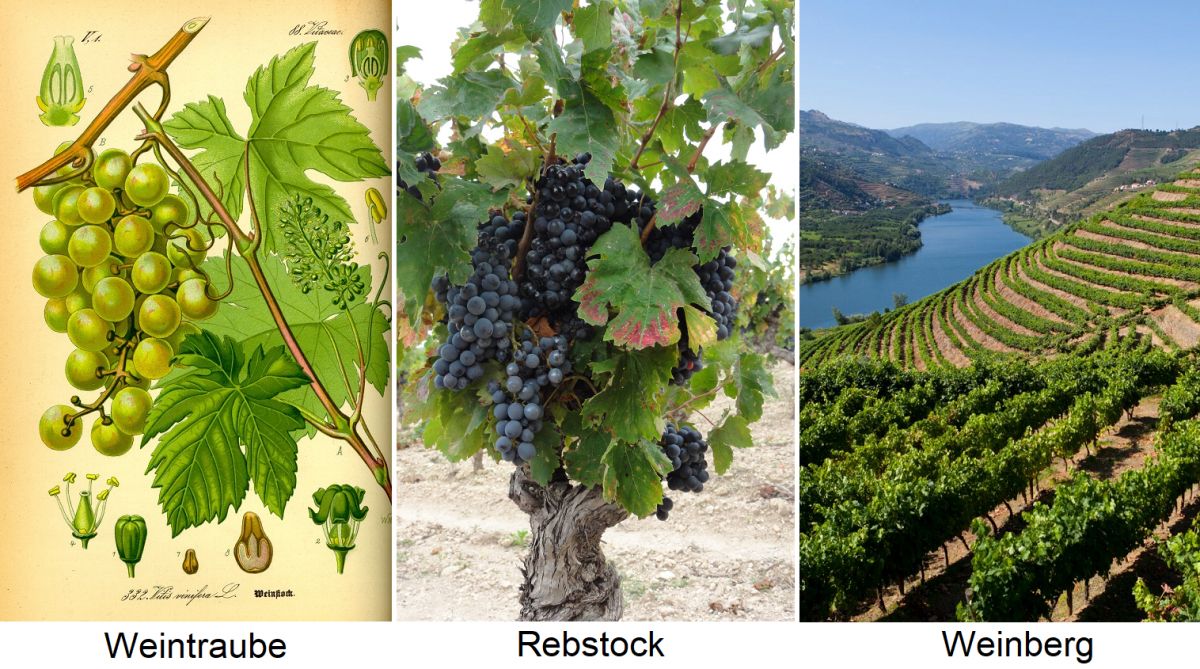
Characteristics of the grape
Strictly speaking, the term "grape" is actually incorrect, as a grape only has secondary stems without branches. The correct botanical term is panicle. Grapes are non-climacteric fruit, which means that they do not ripen after harvesting. The size, number of berries and weight of a bunch of grapes, as well as the number of grapes and the resulting yield per vine vary and depend on the grape variety, pruning, vine training, weather conditions, wine quality and wine type.
In a study, researchers at the Weinsberg Wine Institute determined the average number of berries per bunch of some classic grape varieties. The result: Silvaner 110, Pinot Noir 115, Riesling 120, Kerner 140, Müller-Thurgau 160, Trollinger/Schiava Grossa 155 and Lemberger (Blaufränkisch) 190 berries. There was considerable variation across the different vintages. Lemberger, for example, had between 150...