Term for the grape harvest. Traditionally known as the "Weinlesebann", the start of the grape harvest used to be determined annually by the official bodies and, according to old custom, publicly announced by means of the Gebirgsaufschießen. Today, this can largely be freely determined by each winegrower. The quality term Spätlese no longer has a temporal meaning. In Austria, a declaration of intent must be made to the local authority on the day of harvest for a Prädikat wine. Optimum ripeness of the grapes has an effect on the quality of the wine. The phase between harvesting and pressing or subsequent fermentation should be as short as possible to avoid undesirable oxygen contact and loss of flavour.
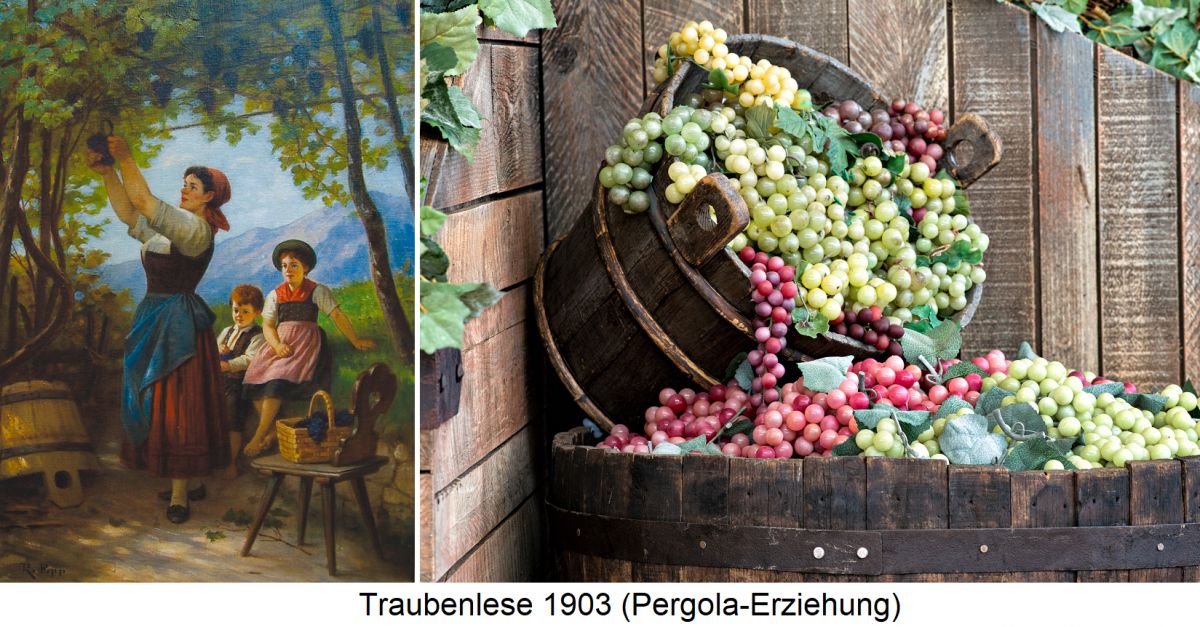
Harvest container
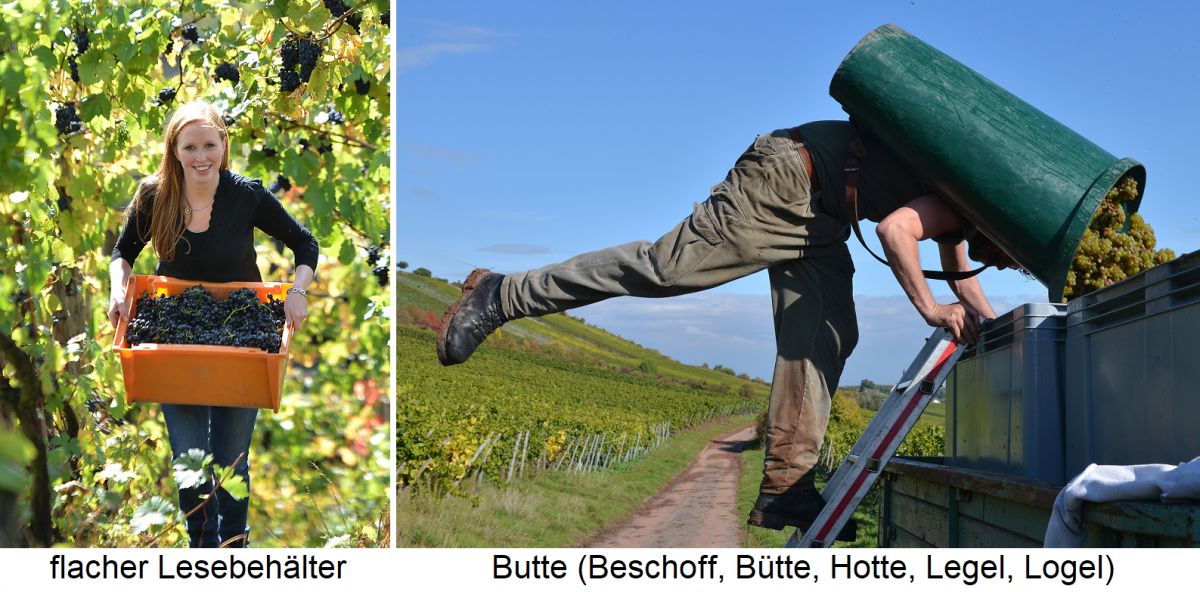
An important quality factor is the type and shape of the harvest containers in which the grapes are stored and transported after being separated from the vine. A high-quality harvest requires small and flat containers (as shown in the picture on the left) so that the grapes are not exposed to too much pressure and, if possible, can be brought to the press house unharmed and quickly. This minimises the risk of damage and contamination by putrefactive bacteria. Depending on the country and region, for example in Champagne, a maximum pouring height in centimetres is even specified. The lower, the better, but the harvesting process is also more complex. However, the traditional butte is also often used.
Time of the grape harvest
The ideal time for harvesting is when the grapes have the best possible balance between the sugar content and the decreasing acidity. In the vegetation cycle of the vine, this is maturation or physiological ripeness. Several criteria influence and determine the optimum harvest time. These are climate (wet weather or rain is negative, the threat of rot or excessive water content), grape variety (there are early to late ripening varieties depending on the time of ripening ), intended use as wine grapes, table grapes or sultanas and the desired wine type...