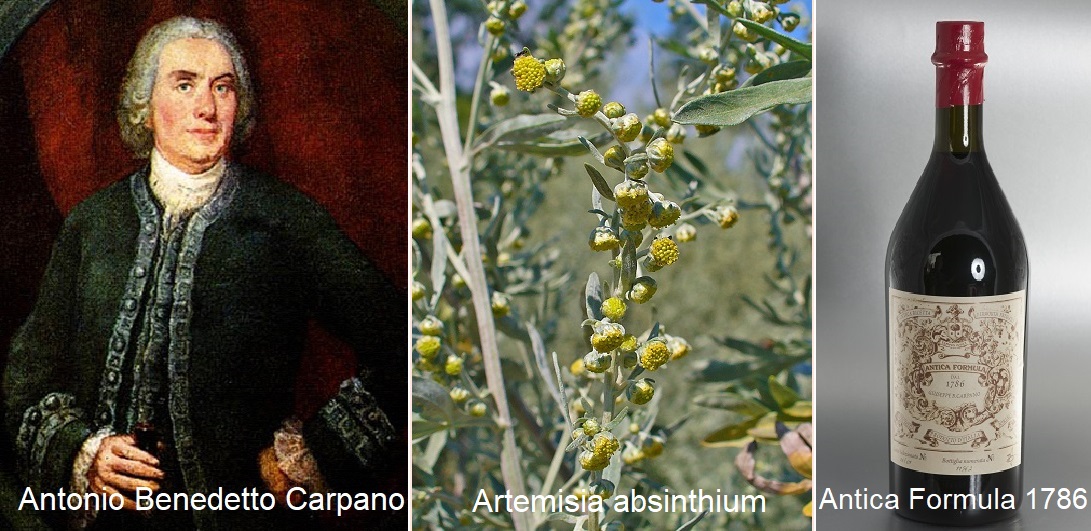

A wine flavoured and fortified with spices and herbs, whose name is derived from the wormwood herb (Artemisia absinthium). This is also used for the famous spirit absinthe with its characteristic green colour. The main ingredient of the plant is the essential oil thujone, which causes the typical bitter flavour. Wines flavoured with herbs, roots, barks, flowers and various sweeteners were already being produced in ancient China, Mesopotamia and ancient Rome.

The Greek physician Hippocrates (460-377 BC) was aware of the digestive properties and healing power of the drink and experimented with it to treat jaundice and tetanus (lockjaw), which was common at the time. The Roman writer Pliny the Elder (23-79) praised a spiced wine called "Hypocras". The Romans called a spiced wine "aperitivum" due to its appetising effect.
It was not until many centuries later that this type of drink became popular and today it is not only popular as an appetiser, particularly in Italy and France. At the beginning of the 16th century, Jeronimo Ruscelli sold vermouth in the Kingdom of...
![]()
I have great respect for the scope and quality of the wein.plus encyclopaedia. It is a unique place to go for crisp, sound information on terms from the world of wine.
Dr. Edgar Müller
Dozent, Önologe und Weinbauberater, Bad Kreuznach