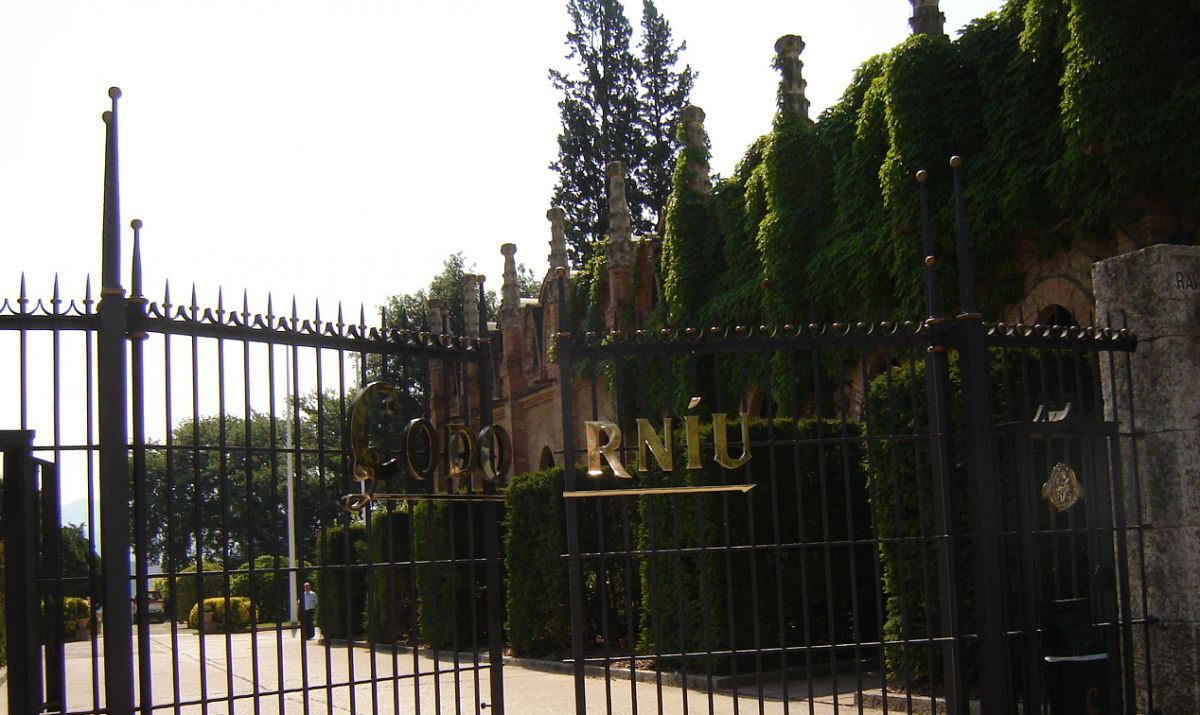
José Raventós is often cited as the inventor of the famous Spanish sparkling wine, which was allegedly first produced in Sant Sadurni d'Anoia in what is now the DO area of Penedès in 1872. However, the honour actually belongs to others. Antoni Gali Comas was already producing a sparkling wine around 1850. Luis Justo y Villanueva (1834-1880), the laboratory director of the Agricultural Institute in Sant Isidre, who taught some producers the champagne method, earned further honours. At a competition in Barcelona in 1872, three of his students presented sparkling wines. The fact is, however, that José Raventós, head of the Codorníu Cava House, was the first to produce sparkling wine from today's standard varieties of Parellada, Xarello and Macabeo, but did not launch it on the market until 1879.
Origin - DO Cava
At that time, the sparkling wine was simply called Xampagny (Champána in Castilian) after its "big brother"(Champagne). The name Cava became established from the 1960s and meant a sparkling wine produced using traditional methods. In Spain, a distinction is made between cava and bodega, both of which mean winery. However, while a bodega is a building at ground level, a cava is built underground. Sparkling wine matures best under cool temperatures during the yeast ageing process and winegrowers have long called their above-ground products bodega wines and the sparkling wines produced underground cava. When Spain joined the EU in 1986, the DO Cava was founded, adding a geographical component. The designation "Cava" was now linked to the production method and origin.
For historical reasons, certain municipalities in the regions of Aragon, Rioja, Valenciana and Extremadura were included in the Cava appellation. This meant that it was not a geographically contiguous area. A total of 159 municipalities were defined, most of which are located in Catalonia. However, a number of them are also scattered in still wine regions such as Ampurdán-Costa Brava, Calatayud, Campo de Borja, Cariñena, Costers del Segre, Extremadura, Navarra, Ribera del Guadiana, Rioja, Tarragona and Utiel-Requena (all the relevant areas are framed in yellow on the map below). Around 90% of Cava sparkling wines come from the Catalonia region, 75% of which come from Penedès. The supra-regional area covers a total of around...