A cadastral district of the 19th municipal district of Döbling in Vienna, which is regarded as the epitome of the Viennese Heurigen par excellence (although there are several other first-class Heurigen areas in the Austrian capital such as Sievering, Heiligenstadt, Stammersdorf, Neustift am Walde, Nußdorf and Mauer ).
The existence of the village dates back to the 12th century. The monastery Klosterneuburg acquired "de Grincing" vineyards for the first time in 1114, and a place called "Grinzingen" is mentioned in 1156. In the Middle Ages, the village was mainly inhabited by winegrowers, farmers and day labourers. From the reign of Emperor Joseph II (1741-1790) - the son of Maria Theresa - "wine tours" around Vienna were common and from the middle of the 19th century Grinzing became a favourite wine tavern for the Viennese. Many artists such as Wolfgang Amadeus Mozart (1756-1791), Franz Schubert (1797-1828) and Ludwig van Beethoven (1770-1827) enjoyed stopping off in Grinzing. The latter lived for a few months in 1817 at the current address of Pfarrplatz 2. The wine tavern of the Mayer winery on Pfarrplatz with vineyards in Grinzing is located in this listed building and is named after him as the "Beethoven House".
![]()
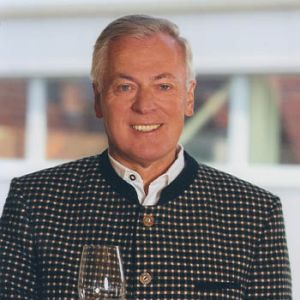
Serious sources on the internet are rare - and Wine lexicon from wein.plus is one such source. When researching for my articles, I regularly consult the wein.plus encyclopaedia. There I get reliable and detailed information.
Thomas Götz
Weinberater, Weinblogger und Journalist; Schwendi