Term (also corker, cork taste, cork tone, leather tone, cone) for a dreaded wine defect that affects the flavour of many millions of bottles of wine every year, making them undrinkable. In Austria, this is also colloquially described as "der Wein stoppelt" (stubble = cork). It is characterised by a musty, mouldy and chemical smell of wet, rotting wood or leather. The odour is sometimes also described as earthy, in which the alcohol type geosmin is involved. The flavour is unpleasantly bitter and astringent. However, the defect can often only be perceived by smell. A typical characteristic is a lack of fruitiness or a partially or completely masked varietal character of the wine.
Symptoms
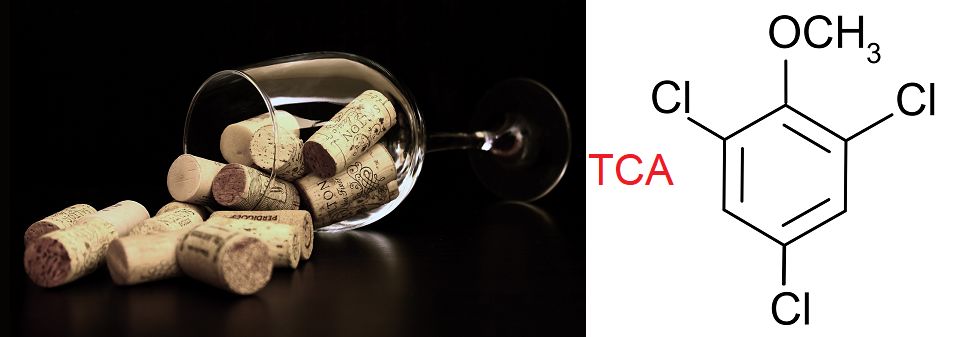
The unpleasant aftertaste lingers for a long time. At a higher wine temperature, the symptoms become even more pronounced. With red wine, the perception threshold is somewhat higher due to the masking tannins, and the defect is not perceived as strongly here. The main cause of the "real cork taint" is trichloroanisole (TCA), the exact chemical name is 2,4,6-trichloroanisole. This was first detected in 1981 by Prof H. Tanner at the Swiss Federal Research Institute in Wädenswil (Switzerland). This substance is produced by microbial methylation of trichlorophenol (TCP). Microorganisms such as moulds convert the TCP into TCA. In Australia, the substance methoxy-dimethylpyrazine was isolated as a second cause in 2004.
Causes
Although TCA usually enters the wine via the cork, it is by no means cork-specific; the starting substance TCP can come from many sources, which makes it difficult to determine the cause. This is also the reason why the cork problem is trivialised or, at worst, regarded as insignificant. As recently as the 1990s, it was common practice in cork...