Monohydric alcohol (also known as carbinol, methyl alcohol, wood alcohol, wood spirit) is a colourless, burning-tasting liquid with an unmistakable, sweetish odour. Although it differs significantly from ethanol (potable alcohol), it can hardly be recognised in terms of taste due to overlapping with other flavourings in alcoholic beverages. Even the ancient Egyptians produced methanol by pyrolysis (splitting organic compounds at high temperatures above 200 °C) of wood and embalmed their dead with a mixture of substances. It was given the name "methylene" in 1834 by the French chemists Jean-Baptiste Dumas (1800-1884) and Eugène-Melchior Péligot (1811-1890), which is made up of "méthy" for wine and "hylé" for wood. Methanol itself is of low toxicity, but its metabolic products are toxic, especially formaldehyde (methanal).

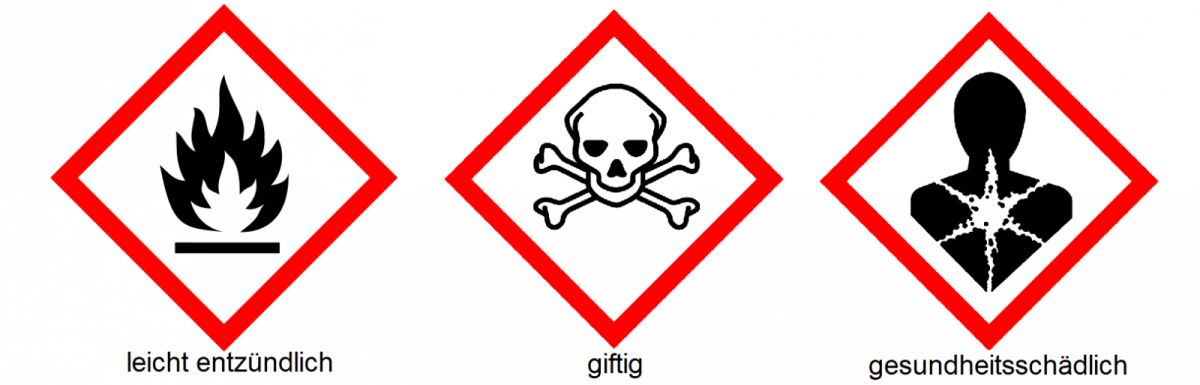
1 = highly flammable, 2 = toxic, 3 = harmful to health
The chemical difference between the alcohol types ethanol and methanol is actually very small. Compared to methanol, ethanol only has a carbon chain that is one atom longer. Both alcohols are not toxic (in small quantities), but they break down at completely different rates after consumption. ADH (alcohol dehydrogenases) are involved in this process in the human body. While ethanol is first converted to acetaldehyde and then very quickly to acetic acid, methanol is...
![]()
If I were to rate websites, you would deserve the highest rating. It is rare to come across websites that provide such a large amount of data and are still so intuitive to use. Respect for the lovingly researched and informatively prepared encyclopedia. Keep it up!
Lothar Lindner
Innsbruck