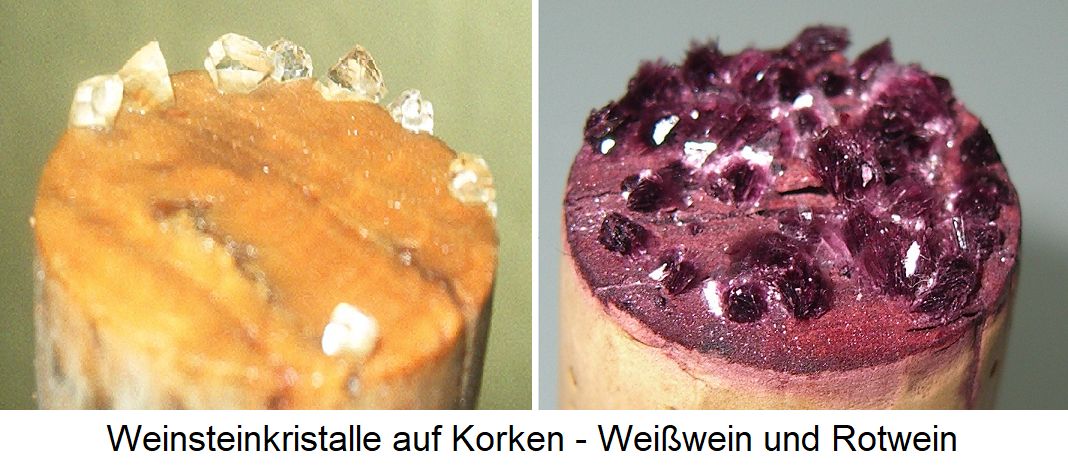

Term for tartar; see there.
Name for the crystalline mixture of sparingly soluble salts of tartaric acid, mainly potassium hydrogen tartrate (also potassium bitartrate) or, to a lesser extent, calcium tartrate, which is formed by combining tartaric acid with potassium or calcium. Prosaic names are wine diamonds or wine stars.
Tartrate is particularly common in wines made from overripe or late harvested grapes, 90% of which is potassium hydrogen tartrate. It precipitates in the form of small crystals, rods and leaves similar to glass splinters. This can already occur in the fermentation or ageing tank (raw wine stone), especially during cold treatment. The formation of crystals increases with increasing alcohol content, low temperature and rising pH value (from 3.2). Colour changes or calcium clouding may also occur.

Images: 1 = white tartrate crystals on the cork of a white wine bottle, 2 = red tartrate crystals on the cork of a red wine bottle, 3 and 4 = hardened tartrate deposits from a wooden barrel
Tartar is not easily soluble in water and therefore settles on the walls of tanks and barrels, on Flaschenbodenthe bottom of...
![]()
If I were to rate websites, you would deserve the highest rating. It is rare to come across websites that provide such a large amount of data and are still so intuitive to use. Respect for the lovingly researched and informatively prepared encyclopedia. Keep it up!
Lothar Lindner
Innsbruck