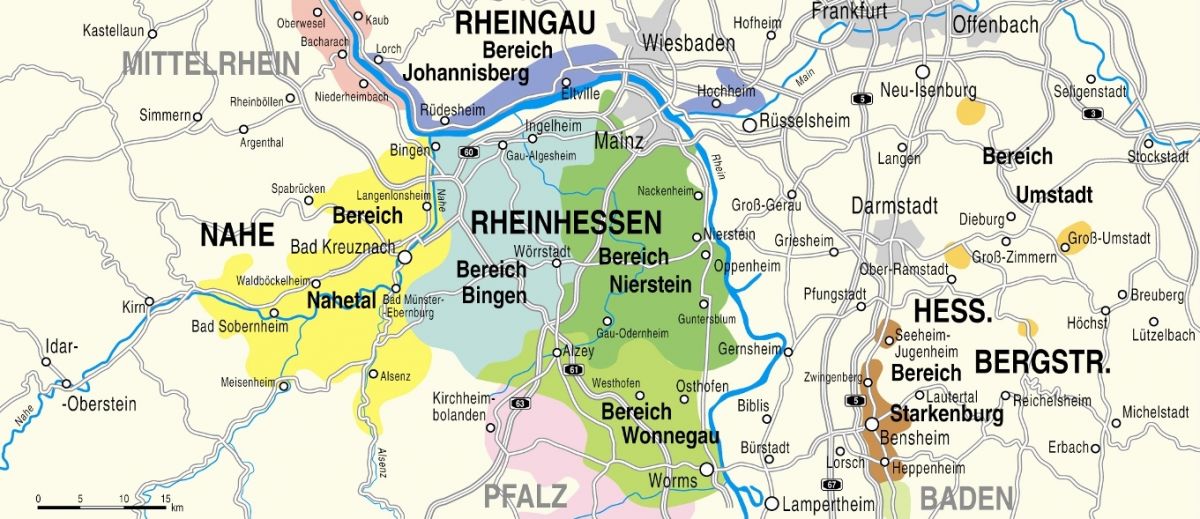

The wine-growing region is located in the state of Rhineland-Palatinate in Germany and is named after the river of the same name. There are many preserved reminders of the Romans, who already cultivated wine here. The vineyards cover 4,237 hectares of vines along the river from Hunsrück to its confluence with the Rhine near Bingen. The Benedictine abbess Hildegard von Bingen (1098-1179) founded the Rupertsberg monastery near Bingen.

The climate is mild and temperate with many hours of sunshine. The sheltered valley location and the surrounding low mountain ranges ensure warm summers and cool nights. The soils are very varied. The lower Nahe is dominated by quartzite and slate, while the middle Nahe is characterised by volcanic rocks such as porphyry and melaphyre as well as red sandstone. Weathered soils, sandstone, loess and loam are found around Bad Kreuznach.
![]()
wein.plus is a handy, efficient guide to a quick overview of the colourful world of wines, winegrowers and grape varieties. In Wine lexicon, the most comprehensive of its kind in the world, you will find around 26,000 keywords on the subject of grape varieties, wineries, wine-growing regions and much more.
Roman Horvath MW
Domäne Wachau (Wachau)