World-famous dessert wine from Portugal, known as "Vinho do Porto" or simply "Porto", which is not named after its region of origin, the Douro, but after the harbour city Porto, from where it is shipped. The English played a major role in its creation in connection with their trade wars with France. For a time in the 17th century, the import of French wines to England was banned and subsequently burdened with high customs duties. This led to a bottleneck in supply. In 1678, a wine merchant from Liverpool sent his two sons to Viano do Castello near the town of Porto to buy wine. In Lamego, they came to a monastery where the abbot served them a wine they were delighted with. The priest told them the secret of why this wine was so pleasantly sweet and smooth, namely by infusing it with brandy, i.e. sprite, during fermentation. The two then bought up the entire stock, sent the consignment to England and the triumphant advance of port wine, initially known as "Red Portugal", began.
British influence
The Methuen Treaty, which was concluded in 1703 and provided customs concessions for the import of Portuguese wines into England, was decisive for the port wine boom. The port wine of the time was almost exclusively destined for export to England, which is why it is still called "Englishmen Wine" today. At that time, it was still common to add red elderberry juice as a colouring agent. From the beginning of the 18th century, English, German and Dutch families settled in Porto to market port wine. These included names that still play a decisive role today, such as Cockburn, Croft, Ferreira, Niepoort, Sandeman, Taylor's and the companies Dow, Graham and Warre, which were later taken over by Symington. In 1790, the British trading houses built the Factory House in Porto, which initially served as a factories and then from 1811 to the present day as a gentlemen's club and meeting place.
The British acquired a monopoly on marketing. Under the Prime Minister Marquês de Pombal (1699-1782), who owned a vineyard in the Carcavelos area, the Douro region was defined within its borders in 1756 to protect the authenticity of port wine. Only the best vineyards were included. Of the approximately 250,000 hectares of land, only around one eighth is suitable for port vines. This makes the area one of the oldest legally demarcated wine-growing regions in the world, alongside Chianti. Pombal enacted further measures to protect port wine. As an important measure to break the English monopoly, he founded the "Real Companhia Velha". He also banned the addition of elderberry juice and fertilising with manure. Although this reduced the yield, it increased the quality.
Port wine region
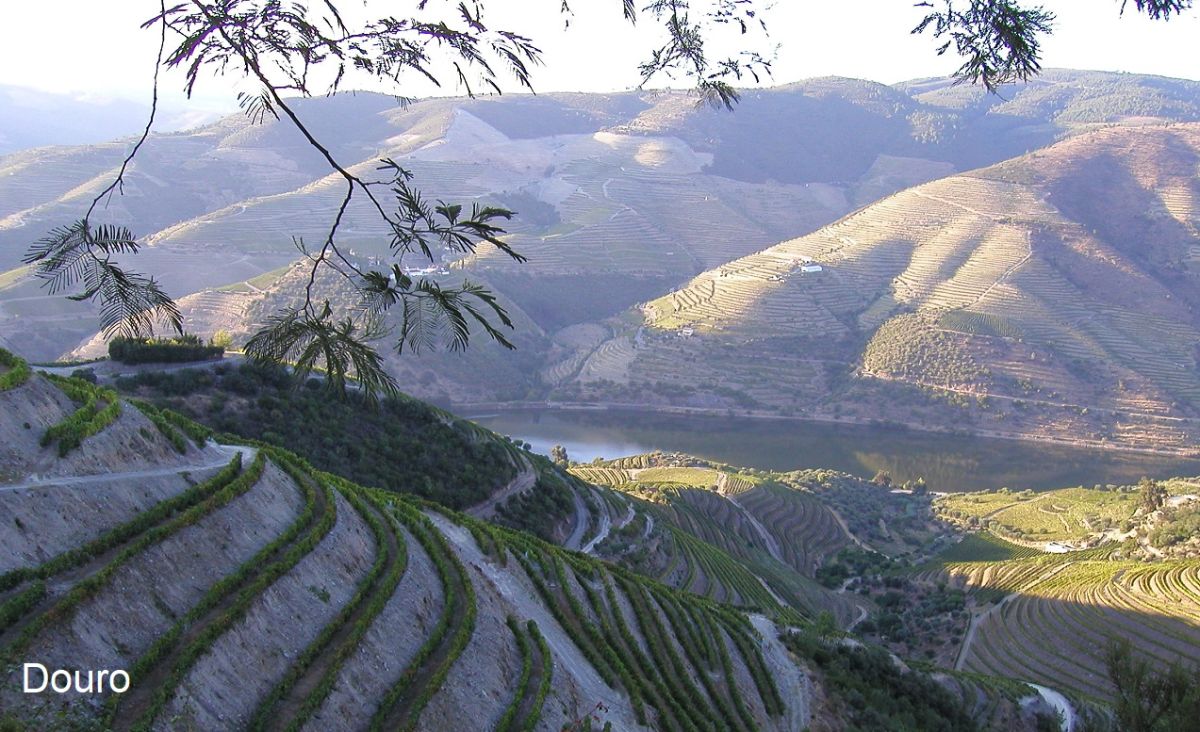
For over two centuries, the defined border applied exclusively to port wine. The Portuguese name "Vinho do Porto" is derived from the town of Porto on the lower course of the Douro. It was not until 1979 that the DOC classification was also extended to "normal" wines, i.e. non-sparkling red and white wines. However, the best soil is reserved for port wine, especially the most suitable slate soils on mostly terraced slopes. The region lies in the north-west of Portugal and encompasses the valleys of the Douro River and its tributaries as far as the Spanish border. These bodies of water have a positive effect on viticulture or create the conditions by forming valley slopes.
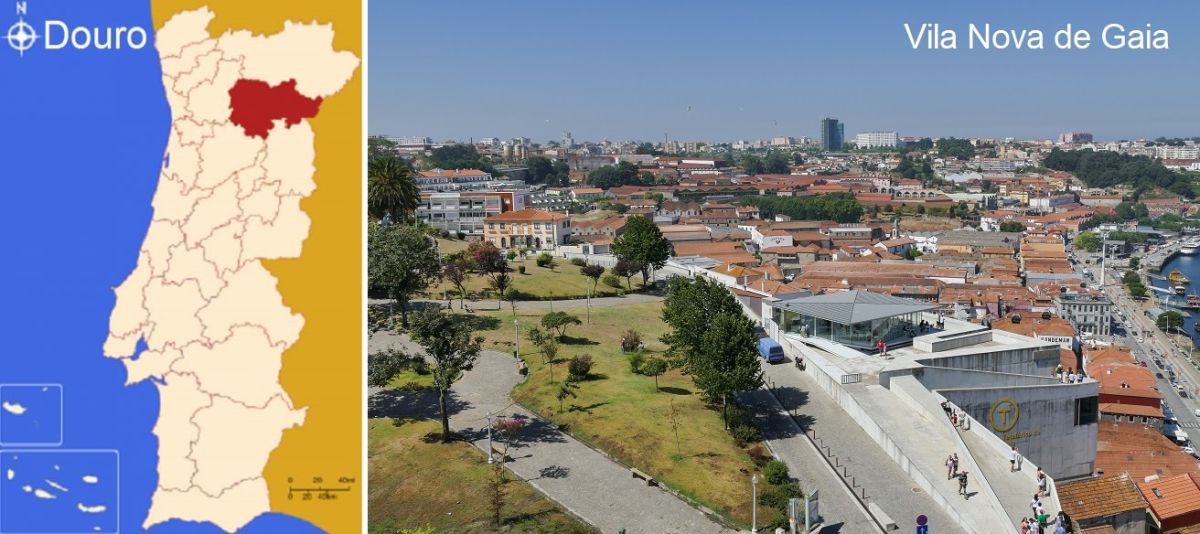
There are three subzones. The "Baixa Corgo" (lower Corgo) zone in the west comprises the area north of the Douro between Barqueiros and the west bank of the Corgo and south of the Douro to Armamar. This coolest and most humid zone produces lighter wines. The largest zone, "Cima Corgo" (upper Corgo), lies to the north and south of the Douro between Baixa Corgo in the west and Cachão da Valeira in the east. The area centred around the town of Pinhão is considered to be the best, with most of the large port wine houses having their quintas (wineries) here. The "Douro Superior" zone lies in the east and extends to the Spanish border in the north. This is the smallest and driest area and some of it has not yet been fully utilised.
There are around 30,000 winegrowers on around 33,000 hectares of vineyards, whose 80,000 vineyards are classified according to a very complex system. The criteria assessed are location, slope (the steeper, the better), exposure, altitude,microclimate, vine training, grape variety, plant density, general condition of the vineyard, age of the vines, soil type (slate, granite, stone content) and yield. This is done in six levels from A (1,200 points and more) to F (399 points and less). This results in the yield that may be produced by the...