wein.plus
Attention
You are using an old browser that may not function as expected.
For a better, safer browsing experience, please upgrade your browser.


You can also use our powerful search function with many flexible filters, such as:

Log in Become a Member

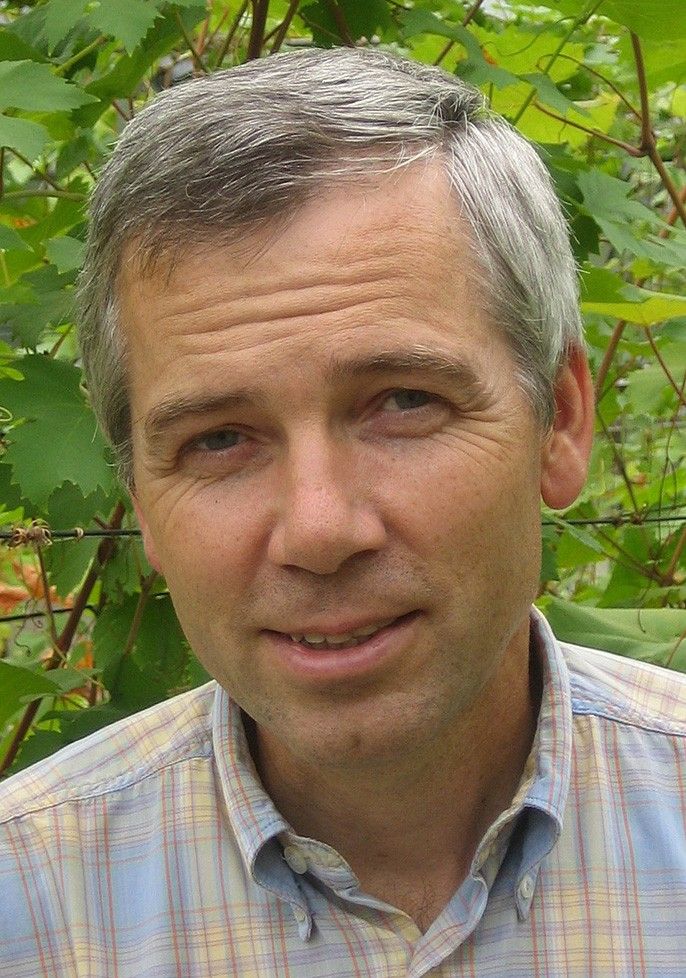
Regner Ferdinand

Dr. Dipl. Ing. Ferdinand Regner (born 1963) is considered a pioneering developer of the genotypic characterization of grape varieties using molecular genetics. He grew up on a farm with viticulture. From 1981, he studied food and biotechnology at the University of Natural Resources and Life Sciences Vienna and worked there until completing his dissertation on resistance breeding using genetic engineering methods. In 2003, he habilitated at the Karl-Franzens-University Graz (Styria) in the field of Applied Botany with the thesis "Modern Developments in Grape Variety Research and Grape Breeding." Since then, he has been teaching a course on the biology of the vine at the Institute of Biology at the University of Graz. Since 1993, Regner has been employed at the Higher Federal Teaching and Research Institute for Viticulture and Pomology Klosterneuburg in Klosterneuburg (Lower Austria) in the field of grape breeding. Since 2003, he has been teaching viticulture at this school. In the EU project "GenRes 081" (Coordination of the conservation, characterization, collection, and sustainable use of genetic resources in agriculture), he is responsible for the documentation of grape varieties. At the Klosterneuburg Institute of Viticulture, he established a molecular research unit. A database was created that contains numerous microsatellite data from over 500 grape varieties and 1,500 individual genotypes. He supervises a long-term project "Crossbreeding" aimed at developing mildew-resistant quality white wine varieties. This is directly related to the issues of climate change and the resulting intensified greenhouse effect. His professional highlights include publications regarding the parentage of numerous grape varieties, the catalog of Austrian quality wine grape varieties and their clones, as well as the release of the Austrian new varieties Donauriesling, Donauveltliner, Blütenmuskateller, and Pinot Nova. Through appropriate DNA analyses, he demonstrated the high importance of the grape groups Fränkisch and Heunisch (Gouais Blanc) as a gene pool for many European varieties. He successfully determined the parentage of Grüner Veltliner, Morillon, Müller-Thurgau (long sought-after father variety), Neuburger, Österreichisch-Weiß, Riesling, Silvaner, and Elbling. For his dissertation, he received the Austrian Biotechnology Award in 1992, the German Peter Morio Prize for his research on variety identification in 1998, and the Rudolf Hermann Foundation Prize (Geisenheim Institute) in 2000. He was awarded the title of Hofrat by the Austrian Federal President.

Voices of our members

Markus J. Eser

Using the encyclopaedia is not only time-saving, but also extremely convenient. What's more, the information is always up to date.

Markus J. Eser
Weinakademiker und Herausgeber „Der Weinkalender“

The world's largest Lexicon of wine terms.

26,803 Keywords · 47,076 Synonyms · 254,655 Cross-references
made with by our author Norbert F. J. Tischelmayer. About the Lexicon

EVENTS NEAR YOU

PREMIUM PARTNERS

wein.plus

Your approval is required –
if you are not a Premium Member

Read with advertising

... or become a Premium Member

Enjoy wein.plus without advertising and tracking by third parties!

Already wein.plus–Premium Member?