
Synonym (also flower) for the fragrance or aroma of a wine; see there.
The term (Greek for "flavour") plays an important role in wine evaluation and wine appreciation. Wine contains many hundreds of aromatic substances with a proportion of 0.8 to 1.2 grams per litre. They can be determined in the laboratory using chromatography. In general, aroma is understood to be the scent of a wine, also known poetically as the "nose". The aroma is perceived by smelling (nose) and not by tasting (palate, tongue), but together with the flavour it forms an overall impression when drinking wine.

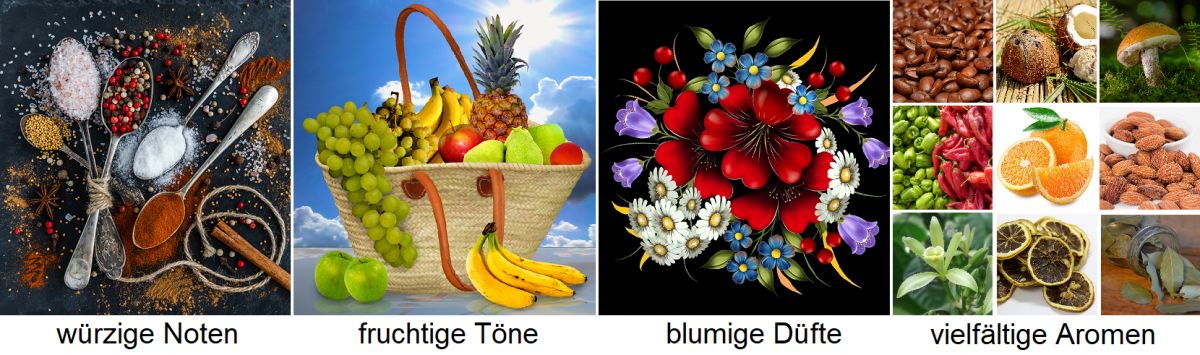
A wine can contain spicy notes (1), fruity tones (2) and floral (3) aromas, which make up the flavour (4). There are three stages of development; this tripartite division is widely recognised among experts. Unpressed grapes contain most of the flavouring substances as glycosides (sugar compounds). However, they are still tasteless and odourless and are only developed through fermentation and bottle ageing. This is why they are referred to as flavour precursors. These can be measured in the grapes using a glycosyl-glucose assay.
Primary flavour (varietal flavour)
The primary flavour comprises...
![]()
wein.plus is a handy, efficient guide to a quick overview of the colourful world of wines, winegrowers and grape varieties. In Wine lexicon, the most comprehensive of its kind in the world, you will find around 26,000 keywords on the subject of grape varieties, wineries, wine-growing regions and much more.
Roman Horvath MW
Domäne Wachau (Wachau)