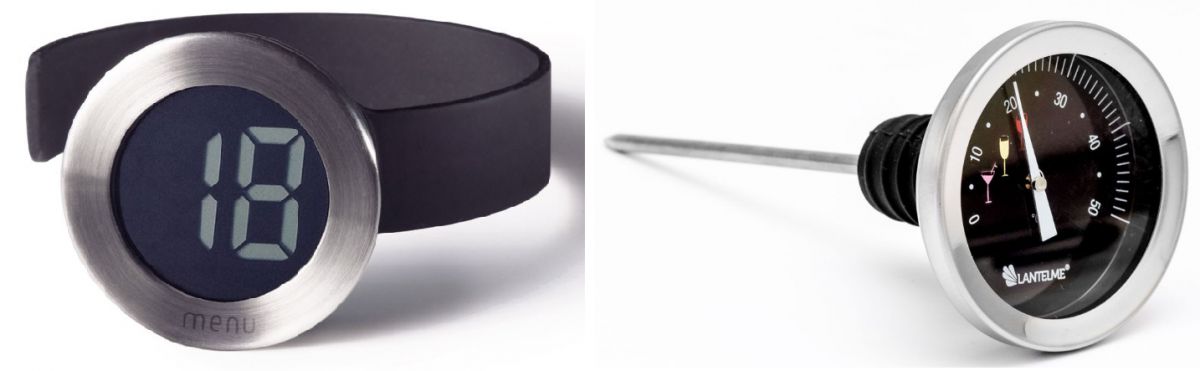
The "right" temperature is a decisive factor for the optimal development of aromas when enjoying wine. The wrong drinking temperature can degrade even a top wine to a meaningless draught wine. The volatile components evaporate when the wine is poured into the glass or decanted. This process is accelerated as the temperature rises. When perceiving, the smell is involved first and only then the taste. The extent of sensations tends to be neutralised below 8 °Celsius, still limited at 12 °Celsius and very high at 18 °Celsius. The wine temperature is also closely related to the taste sensations. Thus, sour and sweet are perceived more strongly at higher temperatures, but astringent, bitter and salty are perceived noticeably more strongly at lower temperatures. Various thermometers can be used to quickly determine the temperature in the bottle or glass.
Serving temperature
A wine should be served about 2 °Celsius too cold rather than too warm. This is because it warms up relatively quickly on its own without any additional effort. Above 20° Celsius, the alcohol begins to evaporate strongly, which can bring a wine "out of balance". With sparkling or effervescent wines, more carbon dioxide is released at a higher temperature, resulting in an unpleasantly frothy taste. Taste deficiencies of a simple wine can be concealed by colder temperature.
The ideal temperature depends primarily on the wine (type and age), but also on the season. In summer, all wines generally taste better when they are a few degrees cooler than in winter. A special wine climate cabinet with different climate zones from which you can take the wine at the ideal temperature is best. Otherwise, the wine must be brought to the right temperature.
Rapid cooling
Putting the bottle in a freezer to cool it down quickly is not recommended shock therapy and could also prove fatal if the bottle breaks. In a normal refrigerator at about 6 to 8 °Celsius, this may take too long. For cooling as quickly as possible, various devices are...