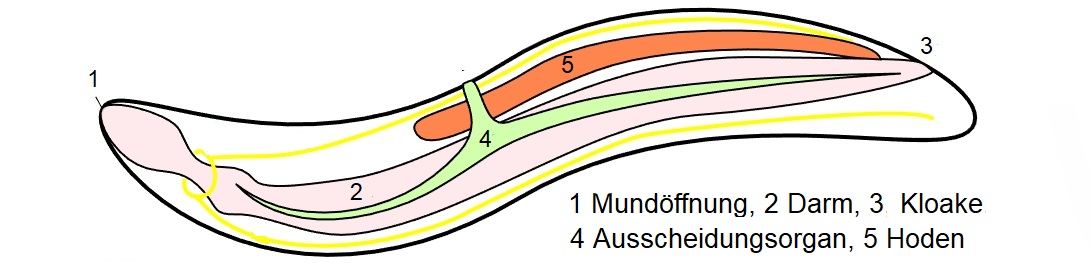

These nematodes (eelworms, roundworms, trichinae) are among the most diverse and individualised group of animals in the world with 20,000 different species. Most of them are very small, ranging from 0.1 to around one millimetre (the largest species, measuring over 8 metres, lives in the placenta of sperm whales). In contrast to more highly developed arthropods (such as earthworms), they have no blood vessels. There are usually males and egg-laying females, but in some cases there is also asexual virgin reproduction (pathenogesis). Four larval moultings take place until sexual maturity.

They feed through a hollow oral spine that moves rhythmically while sucking. They live in the soil and also feed on bacteria or fungi, which is a positive element in the ecological system of a vineyard soil. 1 = Mouth opening, 2 = gut, 3 = cloaca, 4 = excretory organ, 5 = testicles.
In the 1930s they were recognised as a pest of the vine, until then they were thought to be phylloxera. Two groups in particular occur in the vineyard, which are very dangerous to the vine directly through feeding damage and indirectly as virus vectors. As directly damaging parasites, the species...
![]()
The Wine lexicon helps me to keep up to date and refresh my knowledge. Thank you for this Lexicon that will never end in terms of topicality! That's what makes it so exciting to come back often.
Thorsten Rahn
Restaurantleiter, Sommelier, Weindozent und Autor; Dresden